
Introduction
Carbon is a non-metallic element that forms the basis of a large number of compounds. It is present in food, fuels, medicines, plastics, and living organisms.
- Symbol: C
- Atomic number: 6
- Electronic configuration: 2, 4
- Valency: 4
Carbon forms a large number of compounds because of its two important properties: tetravalency and catenation.
Covalent Bonding in Carbon
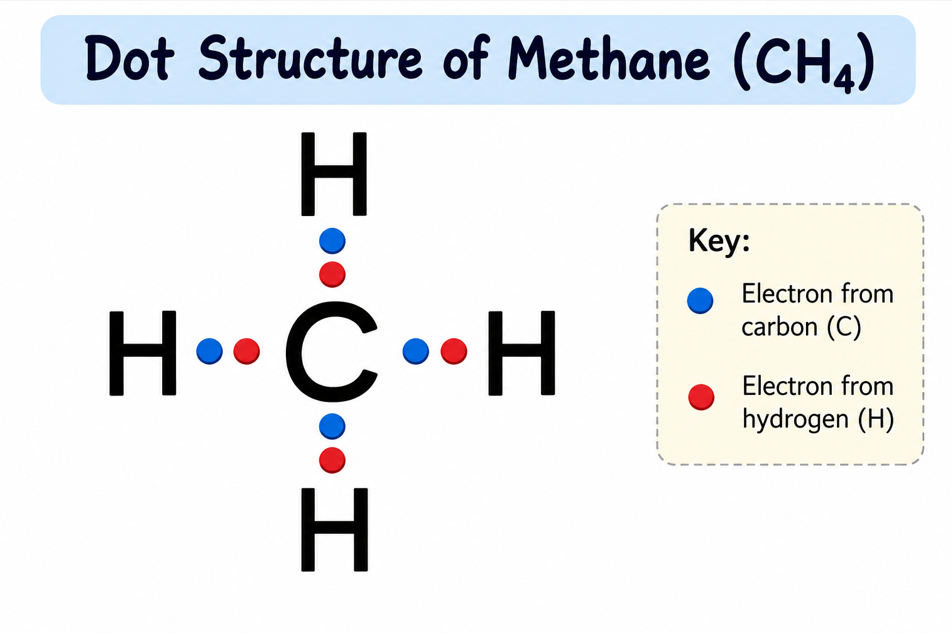
Carbon has four electrons in its outermost shell. It shares electrons with other atoms to complete its octet and form covalent bonds.
Covalent bond: A chemical bond formed by the mutual sharing of electron pairs between atoms.
Types of Covalent Bonds
- Single bond: One pair of electrons is shared. Example: Ethane (C₂H₆).
- Double bond: Two pairs of electrons are shared. Example: Ethene (C₂H₄).
- Triple bond: Three pairs of electrons are shared. Example: Ethyne (C₂H₂).
Properties of Covalent Compounds
- They generally have low melting and boiling points.
- They are generally poor conductors of electricity.
- Many are insoluble in water but soluble in organic solvents.
- Many exist as gases or liquids at room temperature.
These are general properties; some covalent substances, such as diamond, have very high melting points.
Versatile Nature of Carbon
A. Tetravalency
Carbon has a valency of four. It can form four covalent bonds with atoms of carbon and other elements.
B. Catenation
Catenation is the ability of an element to form bonds with atoms of the same element, producing chains, branched structures, or rings.
Carbon exhibits extensive catenation because carbon–carbon bonds are strong and stable.
C. Multiple Bond Formation
Carbon can form single, double, and triple bonds with other carbon atoms.
Examples:
- Ethane: CH₃–CH₃
- Ethene: CH₂=CH₂
- Ethyne: HC≡CH
Allotropes of Carbon
Allotropy is the property of an element to exist in different forms in the same physical state.
| Allotrope | Properties and uses |
|---|---|
| Diamond | Extremely hard; used in jewellery and cutting tools |
| Graphite | Soft and slippery; conducts electricity |
| Fullerene | Carbon atoms arranged in cage-like structures |
Diamond and graphite have different properties because their carbon atoms are arranged differently.
Hydrocarbons
Hydrocarbons are compounds containing only carbon and hydrogen atoms.
Saturated Hydrocarbons
Hydrocarbons containing only single bonds between carbon atoms are called saturated hydrocarbons. They are known as alkanes.
Examples: Methane (CH₄), ethane (C₂H₆), propane (C₃H₈).
General formula: CₙH₂ₙ₊₂
| Name | n | Molecular Formula | Condensed Form |
| Methane | 1 | CH₄ | CH₄ |
| Ethane | 2 | C₂H₆ | CH₃–CH₃ |
| Propane | 3 | C₃H₈ | CH₃–CH₂–CH₃ |
| Butane | 4 | C₄H₁₀ | CH₃–(CH₂)₂–CH₃ |
| Petane | 5 | C₅H₁₂ | CH₃–(CH₂)₃–CH₃ |
| Hexan | 6 | C₆H₁₄ | CH₃–(CH₂)₄–CH₃ |
Unsaturated Hydrocarbons
Hydrocarbons containing at least one carbon–carbon double or triple bond are called unsaturated hydrocarbons.
Alkenes: Contain at least one double bond.
Example: Ethene (C₂H₄).
General formula for open-chain alkenes with one double bond: CₙH₂ₙ
| Name | n | Molecular Formula | Condensed Form |
| Ethene | 2 | C₂H₄ | CH₂=CH₂ |
| Propene | 3 | C₃H₆ | CH₂=CH–CH₃ |
| Butene | 4 | C₄H₈ | CH₂=CH–CH₂–CH₃ |
| Pentene | 5 | C₅H₁₀ | CH₂=CH–CH₂–CH₂–CH₃ |
| Hexene | 6 | C₆H₁₂ | CH₂=CH–CH₂–CH₂–CH₂–CH₃ |
Alkynes: Contain at least one triple bond.
Example: Ethyne (C₂H₂).
General formula for open-chain alkynes with one triple bond: CₙH₂ₙ₋₂
| Name | n | Molecular Formula | Condensed Form |
| Ethyne | 2 | C₂H₂ | HC≡CH |
| Propyne | 3 | C₃H₄ | HC≡C–CH₃ |
| Butyne | 4 | C₄H₆ | HC≡C–CH₂–CH₃ |
| Pentyne | 5 | C₅H₈ | HC≡C–CH₂–CH₂–CH₃ |
| Hexyne | 6 | C₆H₁₀ | HC≡C–CH₂–CH₂–CH₂–CH₃ |
Saturated and Unsaturated Hydrocarbons
| Saturated hydrocarbons | Unsaturated hydrocarbons |
|---|---|
| Contain only single carbon–carbon bonds | Contain double or triple carbon–carbon bonds |
| Called alkanes | Called alkenes or alkynes |
| Generally less reactive towards addition reactions | Commonly undergo addition reactions |
| Example: Ethane | Examples: Ethene and ethyne |
Nomenclature of Carbon Compounds
Nomenclature is the systematic method of naming chemical compounds.
Prefixes Based on the Number of Carbon Atoms
| Carbon atoms | Prefix | Example |
|---|---|---|
| 1 | Meth- | Methane |
| 2 | Eth- | Ethane |
| 3 | Prop- | Propane |
| 4 | But- | Butane |
| 5 | Pent- | Pentane |
| 6 | Hex- | Hexane |
Suffixes Based on the Type of Bond
| Compound | Bond | Suffix | Example |
|---|---|---|---|
| Alkane | Single | -ane | Ethane |
| Alkene | Double | -ene | Ethene |
| Alkyne | Triple | -yne | Ethyne |
Functional Groups
A functional group is an atom or group of atoms that gives an organic compound its characteristic chemical properties.
| Functional group | Representation | Example |
|---|---|---|
| Halo group | –Cl, –Br | Chloromethane |
| Alcohol | –OH | Ethanol |
| Aldehyde | –CHO | Ethanal |
| Ketone | >C=O | Propanone |
| Carboxylic acid | –COOH | Ethanoic acid |
Important compounds:
- Methane: CH₄
- Ethane: C₂H₆
- Ethene: C₂H₄
- Ethyne: C₂H₂
- Ethanol: C₂H₅OH
- Ethanoic acid: CH₃COOH
HALO GROUP
Functional group: –Cl
General representation: R–Cl
| Molecular Formula | Condensed Structural Formula | IUPAC Name | Common Name |
| CH₃Cl | CH₃–Cl | Chloromethane | Methyl chloride |
| C₂H₅Cl | CH₃–CH₂–Cl | Chloroethane | Ethyl chloride |
| C₃H₇Cl | CH₃–CH₂–CH₂–Cl | 1-Chloropropane | n-Propyl chloride |
| C₄H₉Cl | CH₃–CH₂–CH₂–CH₂–Cl | 1-Chlorobutane | n-Butyl chloride |
| C₅H₁₁Cl | CH₃–CH₂–CH₂–CH₂–CH₂–Cl | 1-Chloropentane | n-Amyl chloride |
| C₆H₁₃Cl | CH₃–CH₂–CH₂–CH₂–CH₂–CH₂–Cl | 1-Chlorohexane | n-Hexyl chloride |
Important points:
- The halo group containing chlorine is represented by –Cl.
- In IUPAC nomenclature, chlorine is written as the prefix chloro-.
- In common nomenclature, the name is generally written as alkyl group + chloride.
- The table shows straight-chain compounds with chlorine attached to the first carbon atom.
ALCOHOL GROUP
Functional group: –OH
General representation: R–OH
| Molecular Formula | Condensed Structural Formula | IUPAC Name | Common Name |
| CH₄O | CH₃–OH | Methanol | Methyl alcohol |
| C₂H₆O | CH₃–CH₂–OH | Ethanol | Ethyl alcohol |
| C₃H₈O | CH₃–CH₂–CH₂–OH | Propan-1-ol | n-Propyl alcohol |
| C₄H₁₀O | CH₃–CH₂–CH₂–CH₂–OH | Butan-1-ol | n-Butyl alcohol |
| C₅H₁₂O | CH₃–CH₂–CH₂–CH₂–CH₂–OH | Pentan-1-ol | n-Amyl alcohol |
| C₆H₁₄O | CH₃–CH₂–CH₂–CH₂–CH₂–CH₂–OH | Hexan-1-ol | n-Hexyl alcohol |
Important points:
- The functional group of alcohols is the hydroxyl group (–OH).
- In IUPAC nomenclature, the suffix -ol is used.
- In common nomenclature, the name is generally written as alkyl group + alcohol.
- The table shows straight-chain primary alcohols with the –OH group attached to the first carbon atom.
KETONE GROUP
Functional group: >C=O
| Molecular Formula | Condensed Formula | IUPAC Name | Common Name |
| C₃H₆O | CH₃COCH₃ | Propanone | Acetone |
| C₄H₈O | CH₃COCH₂CH₃ | Butan-2-one | Methyl ethyl ketone |
| C₅H₁₀O | CH₃COCH₂CH₂CH₃ | Pentan-2-one | Methyl propyl ketone |
| C₆H₁₂O | CH₃COCH₂CH₂CH₂CH₃ | Hexan-2-one | Methyl butyl ketone |
Important points:
- The functional group of ketones is the carbonyl group (>C=O) within the carbon chain.
- In IUPAC nomenclature, the suffix “-one” is used.
- The carbonyl group in a ketone is attached to two carbon atoms.
- The general formula for saturated, open-chain ketones is CₙH₂ₙO.
- The simplest ketone is propanone (acetone). Ketones cannot have only one or two carbon atoms.
ALDEHYDE GROUP
Functional group: –CHO
| Molecular Formula | Condensed Formula | IUPAC Name | Common Name |
| CH₂O | HCHO | Methanal | Formaldehyde |
| C₂H₄O | CH₃CHO | Ethanal | Acetaldehyde |
| C₃H₆O | C₂H₅CHO | Propanal | Propionaldehyde |
| C₄H₈O | C₃H₇CHO | Butanal | Butyraldehyde |
| C₅H₁₀O | C₄H₉CHO | Pentanal | Valeraldehyde |
| C₆H₁₂O | C₅H₁₁CHO | Hexanal | Caproaldehyde |
Important points:
- The functional group of aldehydes is –CHO.
- In IUPAC nomenclature, the suffix -al is used.
- The aldehyde group is present at the end of the carbon chain.
- The general formula for saturated, open-chain aldehydes is CₙH₂ₙO.
CARBOXYLIC ACID GROUP
Functional group: –COOH
| Molecular Formula | Condensed Formula | IUPAC Name | Common Name |
| CH₂O₂ | HCOOH | Methanoic acid | Formic acid |
| C₂H₄O₂ | CH₃COOH | Ethanoic acid | Acetic acid |
| C₃H₆O₂ | C₂H₅COOH | Propanoic acid | Propionic acid |
| C₄H₈O₂ | C₃H₇COOH | Butanoic acid | Butyric acid |
| C₅H₁₀O₂ | C₄H₉COOH | Pentanoic acid | Valeric acid |
| C₆H₁₂O₂ | C₅H₁₁COOH | Hexanoic acid | Caproic acid |
Important points:
- The functional group of carboxylic acids is –COOH.
- In IUPAC nomenclature, the suffix “-oic acid” is used.
- The –COOH group is always at the end of the carbon chain.
- The general formula for saturated, open-chain monocarboxylic acids is CₙH₂ₙO₂.
Homologous Series
A homologous series is a group of organic compounds having the same functional group and similar chemical properties, in which consecutive members differ by a –CH₂– unit.
Characteristics
- All members have the same functional group.
- They have the same general formula.
- Successive members differ by –CH₂–.
- The difference in molecular mass between successive members is 14 u.
- They have similar chemical properties.
- Their physical properties show a gradual change with increasing molecular mass.
Example: Homologous series of alkanes
| Name | Formula | Molecular mass |
|---|---|---|
| Methane | CH₄ | 16 u |
| Ethane | C₂H₆ | 30 u |
| Propane | C₃H₈ | 44 u |
| Butane | C₄H₁₀ | 58 u |
ISOMERISM
Isomerism is the phenomenon in which two or more compounds have the same molecular formula but different structural arrangements of atoms. Such compounds are called isomers.
Isomerism occurs because carbon atoms can form straight chains, branched chains, and rings. The same number of carbon and hydrogen atoms can therefore be arranged in different ways.
Isomers of Butane (C₄H₁₀)
| Name of Isomer | Molecular Formula | Structure |
| Butane (straight chain) | C₄H₁₀ | CH₃–CH₂–CH₂–CH₃ |
| 2-Methylpropane (branched chain) | C₄H₁₀ | CH₃–CH(CH₃)–CH₃ |
Note: Butane has two structural isomers with the same molecular formula (C₄H₁₀) but different arrangements of carbon atoms.
Isomers of Pentane (C₅H₁₂)
| Name of Isomer | Molecular Formula | Structure |
| Pentane (straight chain) | C₅H₁₂ | CH₃–CH₂–CH₂–CH₂–CH₃ |
| 2-Methylbutane (branched chain) | C₅H₁₂ | CH₃–CH(CH₃)–CH₂–CH₃ |
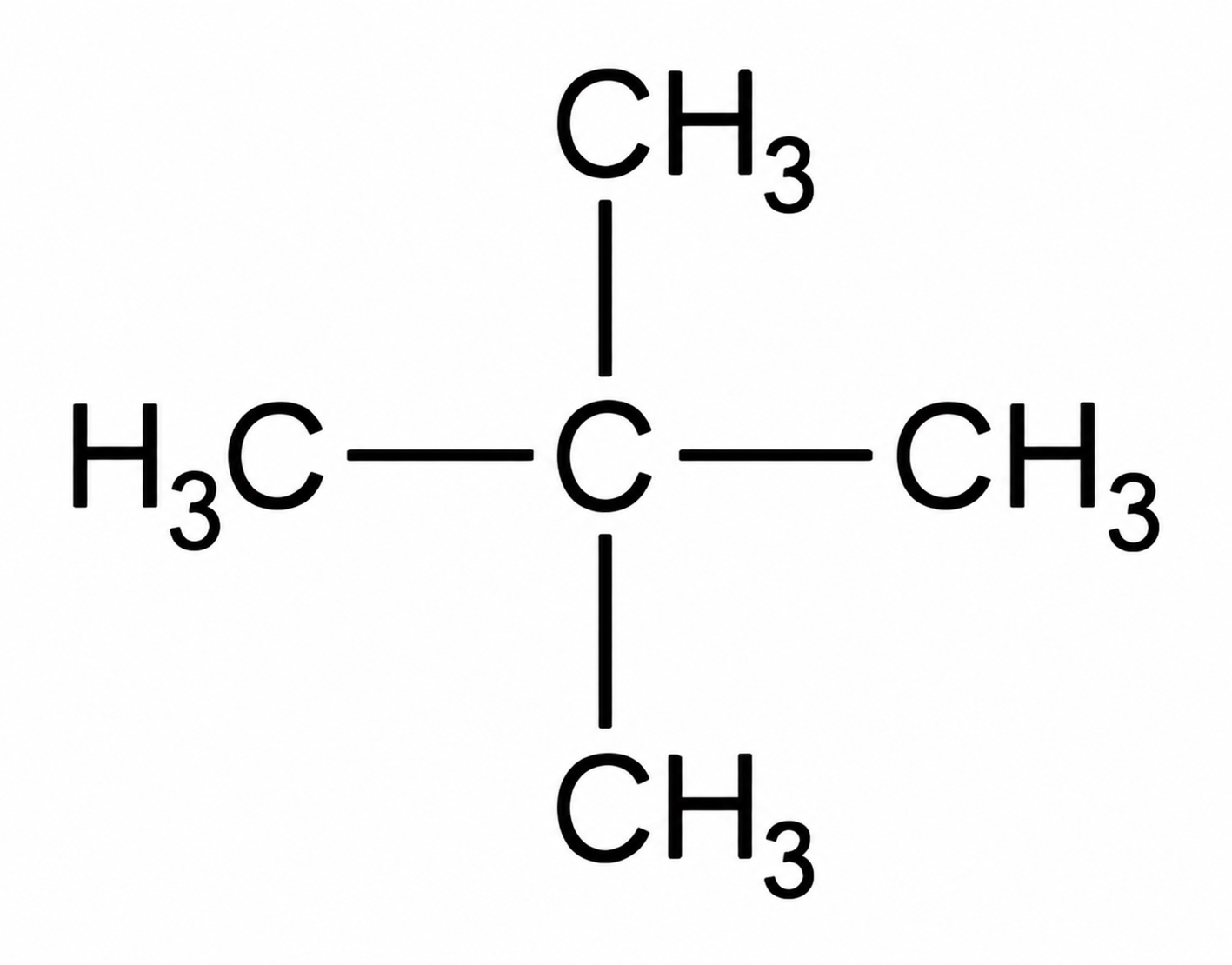
| 2,2-Dimethylpropane (branched chain) | C₅H₁₂ | C(CH₃)₄ |
Important Points to Remember
Note: Pentane has three structural isomers. All have the same molecular formula (C₅H₁₂) but different arrangements of carbon atoms.
- Isomers have the same molecular formula.
- Isomers have different structural formulae.
- Isomerism is common in carbon compounds because carbon exhibits catenation.
- Butane (C₄H₁₀) is the first alkane in the homologous series to show chain isomerism.
Cyclic Compounds
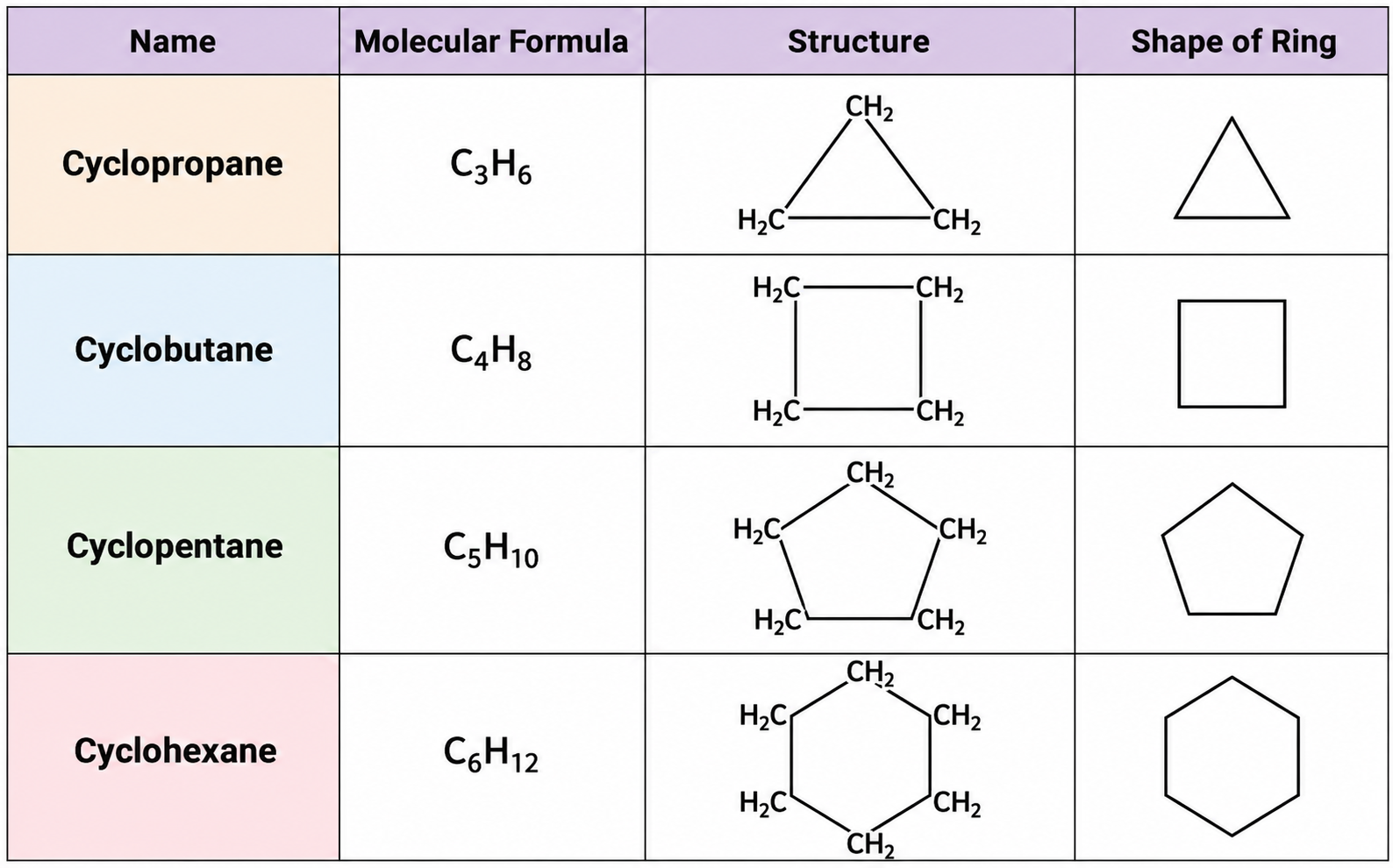
Cycli compounds are carbon compounds in which carbon atoms are joined together to form a closed chain or ring.
Benzene (C₆H₆)
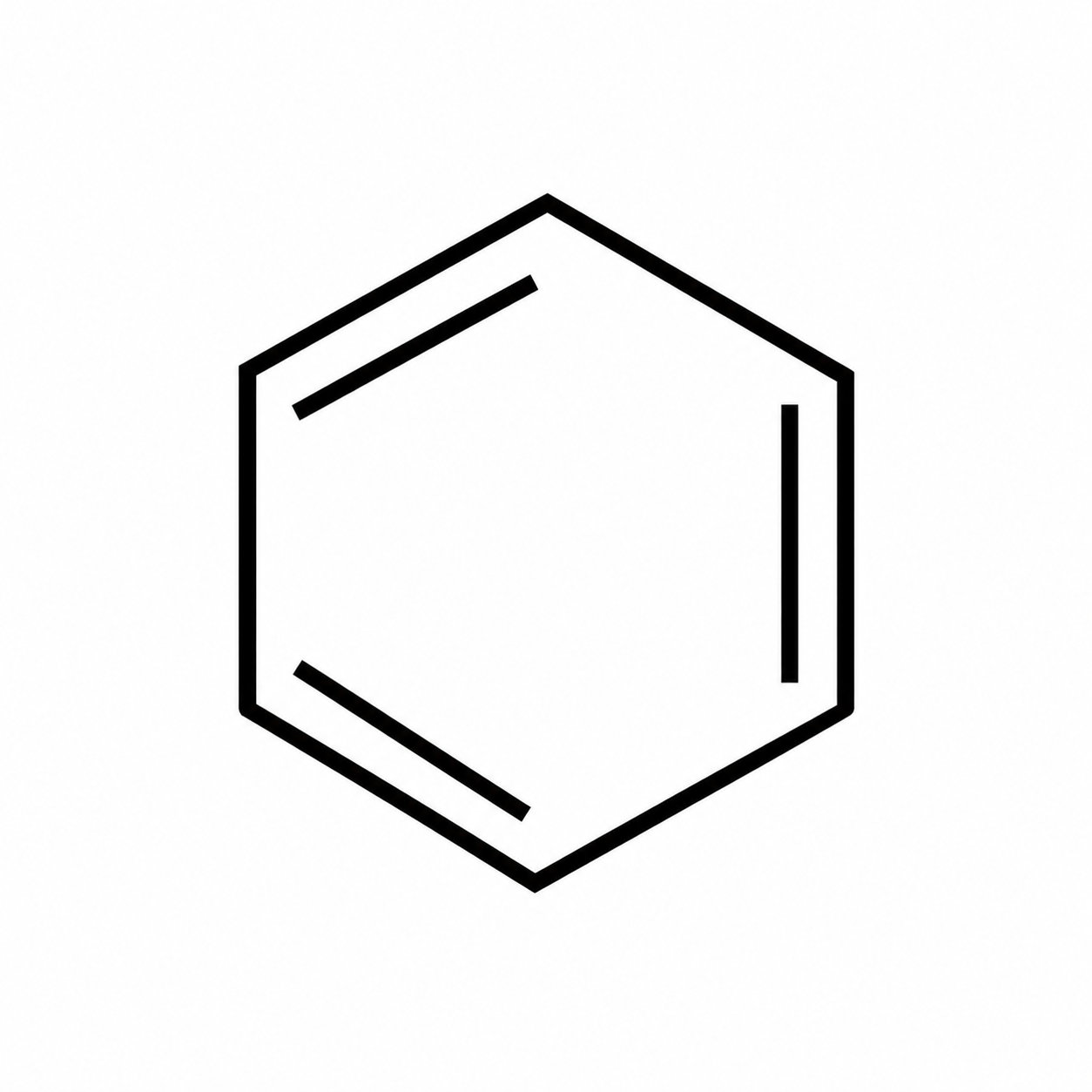
Benzene is a cyclic, unsaturated hydrocarbon consisting of six carbon atoms arranged in a ring, with alternating double bonds in its conventional structural representation.
Chemical Properties of Carbon Compounds
Combustion
Combustion is a chemical reaction in which a substance reacts with oxygen, releasing energy as heat and often light.
Example: Combustion of methane
CH₄ + 2O₂ → CO₂ + 2H₂O + Heat
Carbon compounds are commonly used as fuels because many release considerable energy during combustion.
Incomplete combustion may produce carbon monoxide or soot when oxygen is insufficient.
Oxidation
Oxidation is a reaction in which a substance gains oxygen or loses hydrogen.
Ethanol is oxidised to ethanoic acid using suitable oxidising agents such as alkaline potassium permanganate or acidified potassium dichromate.
CH₃CH₂OH + 2[O] → CH₃COOH + H₂O
Addition Reaction
An addition reaction occurs when atoms are added to an unsaturated compound.
Example: Hydrogenation of ethene
CH₂=CH₂ + H₂ → CH₃–CH₃
Condition: Nickel or another suitable catalyst.
Ethene is converted into ethane.
Hydrogenation is also used to make certain solid or semi-solid fats from unsaturated vegetable oils.
Substitution Reaction
A substitution reaction occurs when one atom or group of atoms is replaced by another.
Example: Reaction of methane with chlorine
CH₄ + Cl₂ → CH₃Cl + HCl
CH₄ + Cl₂ → CH2Cl2 + HCl
CH₄ + Cl₂ → CHCl3 + HCl
CH₄ + Cl₂ → CCl4 + HCl
Condition: Sunlight.
One hydrogen atom of methane is replaced by a chlorine atom.
Ethanol
Ethanol is an alcohol with the molecular formula C₂H₅OH.
Properties
- Colourless liquid with a characteristic smell.
- Soluble in water.
- Neutral to litmus under ordinary conditions.
- Combustible and releases energy on burning.
- Used as a solvent in various products.
Important Reactions
A. Reaction with sodium
2C₂H₅OH + 2Na → 2C₂H₅ONa + H₂
Products: Sodium ethoxide and hydrogen gas.
B. Dehydration of ethanol
When ethanol is heated with concentrated sulphuric acid at 443 K, it forms ethene and water.
C₂H₅OH → CH₂=CH₂ + H₂O
C. Combustion of Ethanol
C₂H₅OH + 3O₂ → 2CO₂ + 3H₂O + Heat
Uses of Ethanol
- Used as a solvent in medicines and perfumes.
- Used in certain fuel blends.
- Used in the manufacture of chemicals.
- Used in suitable disinfectant formulations.
Ethanol is flammable. Alcohol intended for industrial or laboratory use must never be consumed.
Denaturation of Alcohol
The process of making ethanol unfit for drinking by adding poisonous substances such as methanol is called denaturation of alcohol.
Methanol is highly poisonous and can cause blindness or even death if consumed.
Real-life Example: Denatured alcohol is used in spirit lamps in laboratories and as a cleaning solvent. The alcohol is made unfit for drinking to prevent its misuse.
Uses of Denatured Alcohol:
- Used as an industrial solvent.
- Used as a fuel in spirit lamps.
- Used in various industrial processes.
Note: Denatured alcohol is poisonous and must never be consumed.
Ethanoic Acid
Ethanoic acid, also called acetic acid, is a carboxylic acid with the formula CH₃COOH.
A dilute solution containing approximately 5–8% ethanoic acid in water is commonly known as vinegar.
Properties
- Colourless liquid with a characteristic pungent smell.
- Soluble in water.
- Turns blue litmus red.
- It is a weak acid.
- Pure ethanoic acid freezes at approximately 16.6°C and is called glacial acetic acid.
Important Reactions
A. Reaction with sodium hydroxide
CH₃COOH + NaOH → CH₃COONa + H₂O
Products: Sodium ethanoate and water.
B. Reaction with sodium hydrogen carbonate
CH₃COOH + NaHCO₃ → CH₃COONa + H₂O + CO₂
Carbon dioxide gas is released, causing effervescence.
C. Reaction with sodium carbonate
2CH₃COOH + Na₂CO₃ → 2CH₃COONa + H₂O + CO₂
Esterification
Esterification is the reaction between a carboxylic acid and an alcohol to form an ester and water, usually in the presence of concentrated sulphuric acid.
Example: Ethanoic acid reacts with ethanol
CH₃COOH + C₂H₅OH ⇌ CH₃COOC₂H₅ + H₂O
Condition: Concentrated H₂SO₄ and warming.
Products: Ethyl ethanoate and water.
Esters generally have pleasant, fruity smells and are used in perfumes and flavouring agents.
Soaps and Detergents
Soap
Soap is generally the sodium or potassium salt of a long-chain fatty acid.
Soap is prepared by heating fats or oils with sodium hydroxide or potassium hydroxide. This process is called saponification.
Detergents
Detergents are cleansing agents, commonly synthetic, that are generally effective in both soft and hard water.
Cleansing Action of Soap
A soap molecule has two parts:
- Hydrophilic head: Attracted to water.
- Hydrophobic tail: Attracted to oil and grease.
The hydrophobic tails attach to oily dirt while the hydrophilic heads remain in contact with water. Soap molecules form structures called micelles, which help suspend dirt in water so that it can be washed away.
Soaps and Detergents
| Soaps | Detergents |
|---|---|
| Usually salts of long-chain fatty acids | Commonly synthetic cleansing agents |
| Form scum with calcium and magnesium ions | Many work effectively in hard water |
| Generally less effective in hard water | Generally more effective in hard water |
| Some soaps are readily biodegradable | Biodegradability depends on their formulation |
Important Chemical Equations for Revision
- Combustion of methaneCH₄ + 2O₂ → CO₂ + 2H₂O
- Oxidation of ethanolCH₃CH₂OH + 2[O] → CH₃COOH + H₂O
- Addition of hydrogen to etheneCH₂=CH₂ + H₂ → CH₃–CH₃
- Substitution reaction of methaneCH₄ + Cl₂ → CH₃Cl + HCl
- Ethanol with sodium2C₂H₅OH + 2Na → 2C₂H₅ONa + H₂
- Ethanoic acid with sodium hydrogen carbonateCH₃COOH + NaHCO₃ → CH₃COONa + H₂O + CO₂
- EsterificationCH₃COOH + C₂H₅OH ⇌ CH₃COOC₂H₅ + H₂O
Important Questions for Examination
Very Short-Answer Questions
- What is catenation?
- Define a covalent bond.
- Why does carbon form four covalent bonds?
- What are hydrocarbons?
- Define a homologous series.
- Write the molecular formula of ethene and ethyne.
- Name the functional group present in ethanol.
- What is vinegar?
- What is esterification?
- What is saponification?
Short-Answer Questions
- Explain tetravalency and catenation.
- Differentiate between saturated and unsaturated hydrocarbons.
- State three characteristics of a homologous series.
- Explain the difference between ethanol and ethanoic acid.
- Why are soaps ineffective in hard water?
- Explain the cleansing action of soap.
- Write balanced chemical equations for the combustion of methane and the reaction between ethanoic acid and sodium hydrogen carbonate.
- Explain addition and substitution reactions with examples.
Long-Answer Questions
- Explain the chemical properties of carbon compounds with suitable equations.
- Describe the properties and chemical reactions of ethanol and ethanoic acid.
- Explain the formation of esters and mention their uses.
- Compare soaps and detergents and explain their cleansing action.